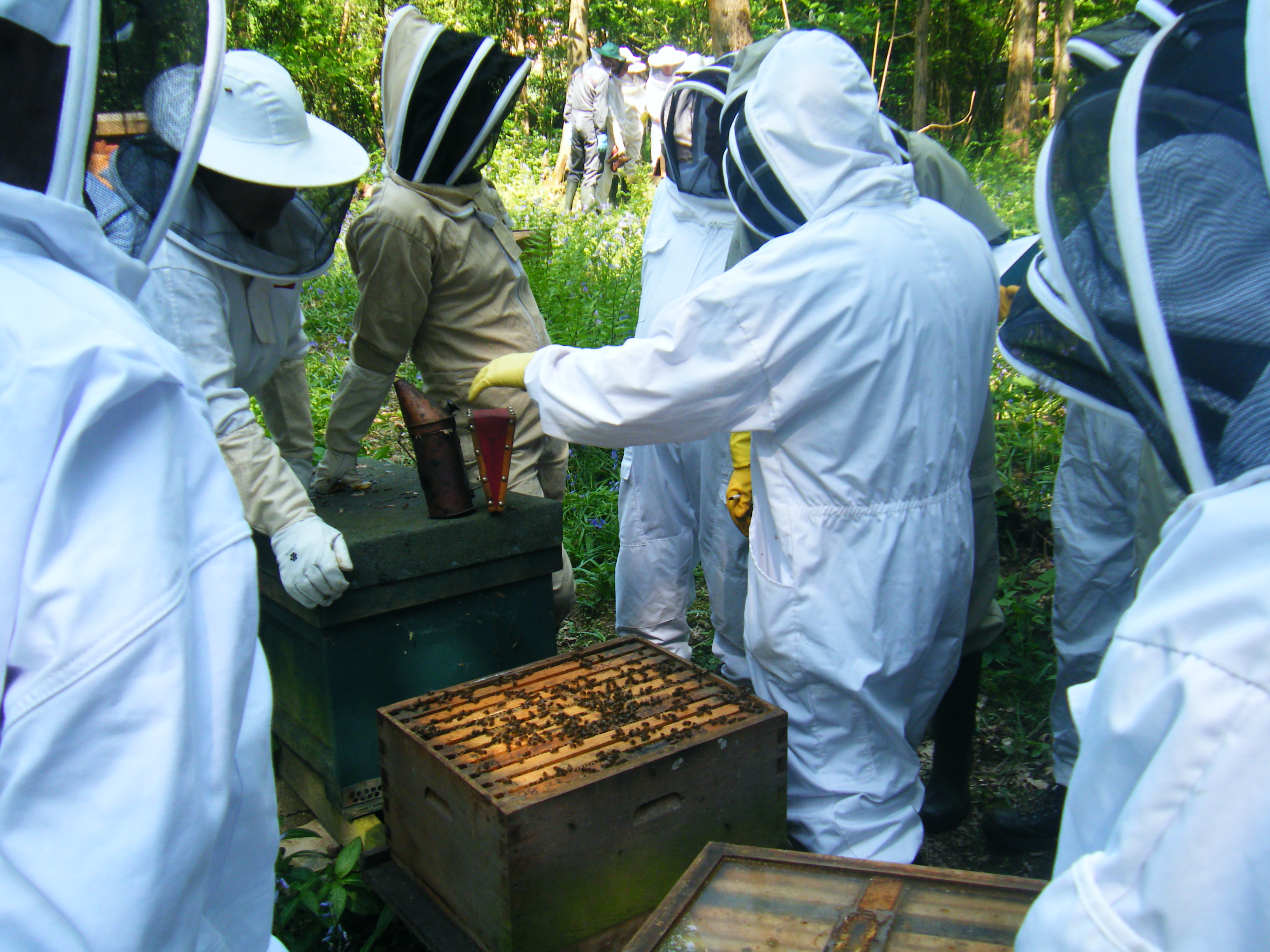
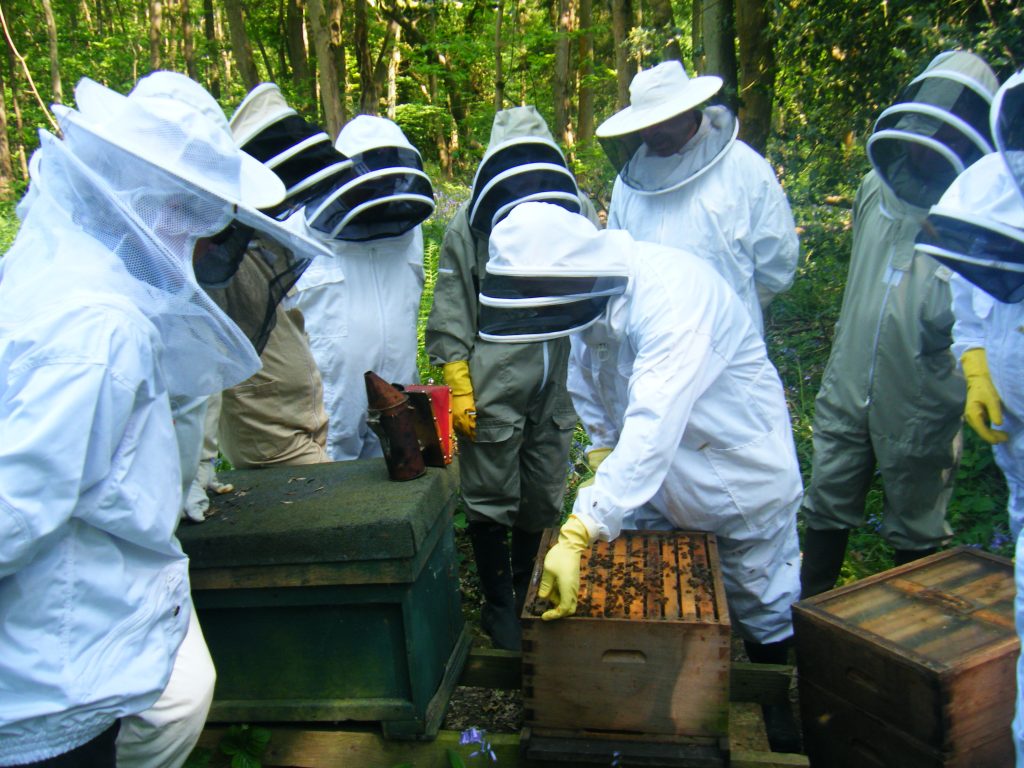
The Branch has two training apiaries one in Tunbridge Wells and one in south Sevenoaks/Hildenborough.
If you are interested in beekeeping and contemplating buying equipment, we suggest you come along to one of our apiaries and try a taster session first to see if you are comfortable handling bees before making any outlay . Please contact one of our apiary managers to introduce yourself and find out about the next apiary meeting date.
When attending one of our apiaries we can supply a bee suit for the session, but we’d suggest you come dressed in a long sleeved top, trousers [not shorts] and wellington boots so trousers or the bee-suit can be tucked inside them.
Young persons (under 18) must be accompanied by a parent or guardian. If you are not certain of the Apiary locations, check with the appropriate Apiary manager.
Apiary meetings usually take place between April and October each year but remember all outdoor meetings are subject to change because of the weather etc…, so please check the website ‘Notice Board’ for change or cancellation information before setting out, or contact the appropriate Apiary Manager:
Barrwood Apiary Managers
- Cliff Hayward Email: chairman@sevenoaksbeekeepers.org.uk or
- Martin Barrett Email: barrwoodapiary@sevenoaksbeekeepers.org.uk
Barrwood meeting dates for 2026 to be advised. Barrwood meetings start at 2:00 pm unless previously advised.
Hilbert Road Apiary Manager
- Sue Knights Email: hilbertapiary@sevenoaksbeekeepers.org.uk
Barrwood meeting dates for 2026: Meetings always start at 11:00 am unless otherwise advised.
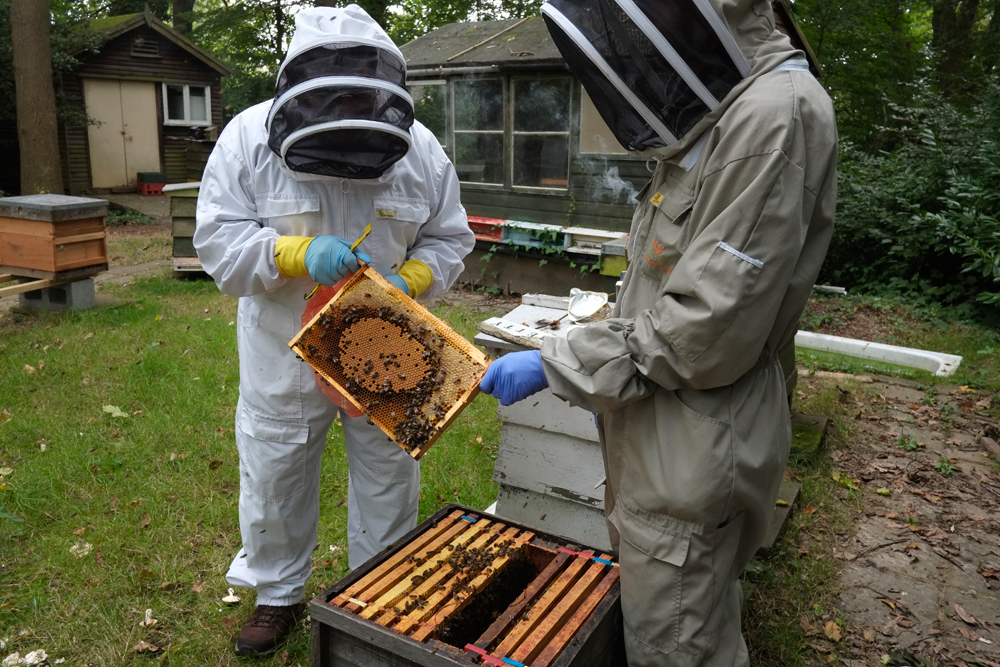
Here are some basic facts on the Developmental Period of a colony of Bees. But go to ‘Articles‘ for further useful information for beginners or to ‘Web Watch‘ for some of the best bee related information on the web.
Within a hive there will (usually) be one queen bee plus thousands of female workers and a number of male drones.
Egg development periods:
Queen 16 days,
Worker 21 days
Drone 24 days
Queen Fertility 23+ days
Drone Fertility 38+ days
Typical Colony size:
Within a typical healthy beehive in mid-summer there will be around 50/70,000 bees, consisting of 1 queen, approximately 250 drones, 20,000 female foragers, 30,000 female house-bees, 5,000 to 7,000 eggs, 7,000-11,000 larvae being fed, 16,000 to 24,000 larvae developing into adults in sealed cells and 24,000 larvae developing into adults in sealed cells.
In summer a worker bee lives only 6 to 8 weeks from the time she hatches as an adult bee.
In late autumn the queen lays eggs that develop into workers that live for 4/6 months to survive the winter.